







Do Heat Pumps Need Different Radiators to Gas Central Heating?
Posted by Radiators 4u on 5th Feb 2026
If you’re switching from gas central heating to a heat pump, one of the biggest (and most misunderstood) changes isn’t the heat source — it’s the radiators.
At first glance, a radiator is just a radiator… but how heat pumps deliver warmth means the type of radiator you choose makes a huge difference to comfort, efficiency, and running costs.
Let’s break it down using a simple analogy.
Gas Boilers vs Heat Pumps: One Big Delivery vs Many Small Ones
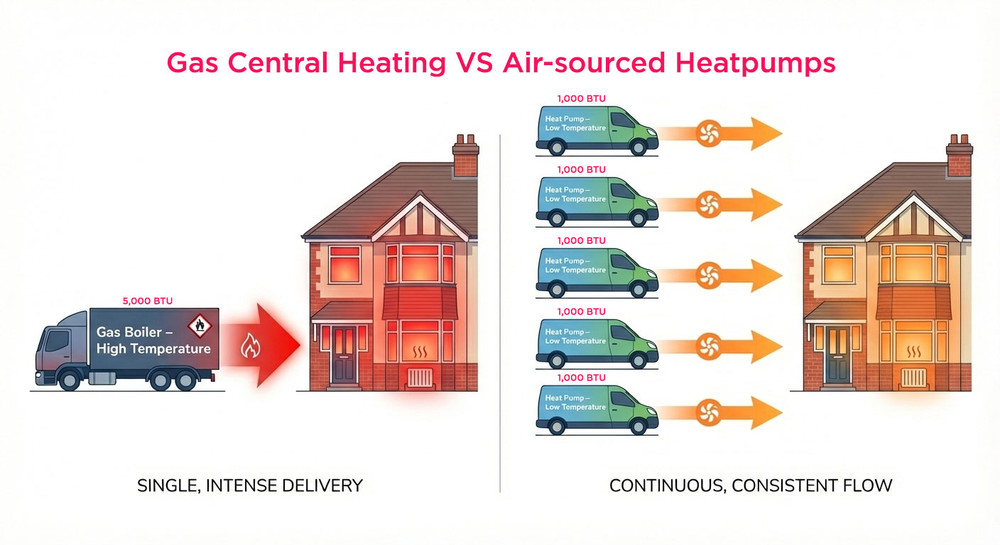
Gas Central Heating:
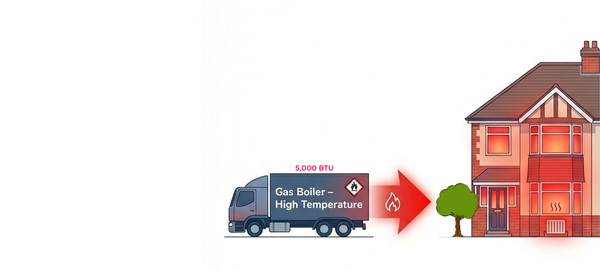
Think of a traditional gas boiler like a big articulated lorry delivering heat to your home.
- It arrives with a huge amount of heat all at once
- The water temperature is high
- It takes time to “empty” that heat into the room
- Radiators get very hot, very quickly
Air Sourced Heat Pump:
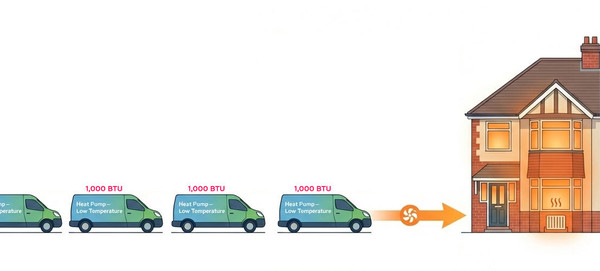
Now compare that to a heat pump, which works more like a fleet of small delivery vans.
- Each van carries less heat
- The water temperature is lower
- Vans arrive continuously, all day
- Heat is delivered steadily rather than in bursts
The important thing?
The room still needs the same total amount of heat — it just arrives in a very different way.
Lower Temperatures, Longer Run Times
Heat pumps are designed to run:
- At lower flow temperatures
- For longer periods of time
- More steadily, rather than on/off bursts
This is where radiator choice becomes critical.
With lower water temperatures, a radiator has to work harder to release (or “lose”) its heat into the room. If it can’t do that efficiently, the system struggles to keep up — no matter how good the heat pump is.
Why Radiator Efficiency Matters More with Heat Pumps
With a gas boiler, brute force helps you out.
Very hot water can mask an inefficient radiator.
With a heat pump, there’s no such safety net.
To get the heat out of those “small vans” quickly and effectively, you need a radiator that:
- Reacts fast
- Transfers heat efficiently
- Doesn’t rely on high temperatures to perform
That’s why radiator material suddenly becomes far more important.
Aluminium vs Steel vs Cast Iron (and Why It Matters)
Traditional systems often favour steel or cast iron radiators. These materials:
- Take longer to warm up
- Store heat well once hot
- Continue to radiate warmth after the boiler switches off
That heat storage bonus works brilliantly with gas boilers — but it doesn’t really apply to heat pumps.
Heat pumps don’t blast heat and then shut down. They keep delivering a steady supply. So instead of storing heat, you want a radiator that can:
- Heat up quickly
- Give off heat efficiently at lower temperatures
- Respond instantly to demand
This is where aluminium radiators excel.
Why Aluminium Works Better with Heat Pumps
- Much faster heat transfer
- Excellent output at lower flow temperatures
- Responds quickly to the constant “van deliveries” of heat
- No reliance on stored heat after switch-off
In simple terms:
Aluminium empties each delivery van quickly, so the next one can do the same — all day long.
The Big Takeaway
Switching to a heat pump doesn’t just mean changing how heat is made — it changes how heat needs to be released into your home.
- Gas boilers = big lorry, high temps, slow release
- Heat pumps = many small vans, low temps, fast release
- Efficient radiators matter far more
- Aluminium often outperforms steel or cast iron
- Stored heat isn’t the advantage it once was
Choosing the right radiator lets your heat pump do what it does best: deliver steady, efficient, low-cost warmth — comfortably and consistently.
Understanding why heat pumps need different radiators is one thing.
Choosing a radiator built specifically for that job is what unlocks comfort, efficiency, and lower running costs.
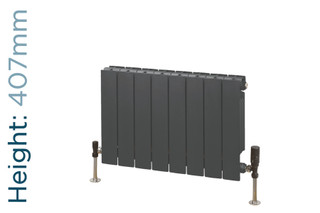
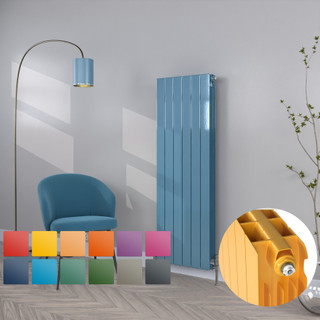
That’s exactly what our Altherma aluminium radiator range is designed to do.
Meet Altherma – Aluminium Radiators Engineered for Heat Pumps
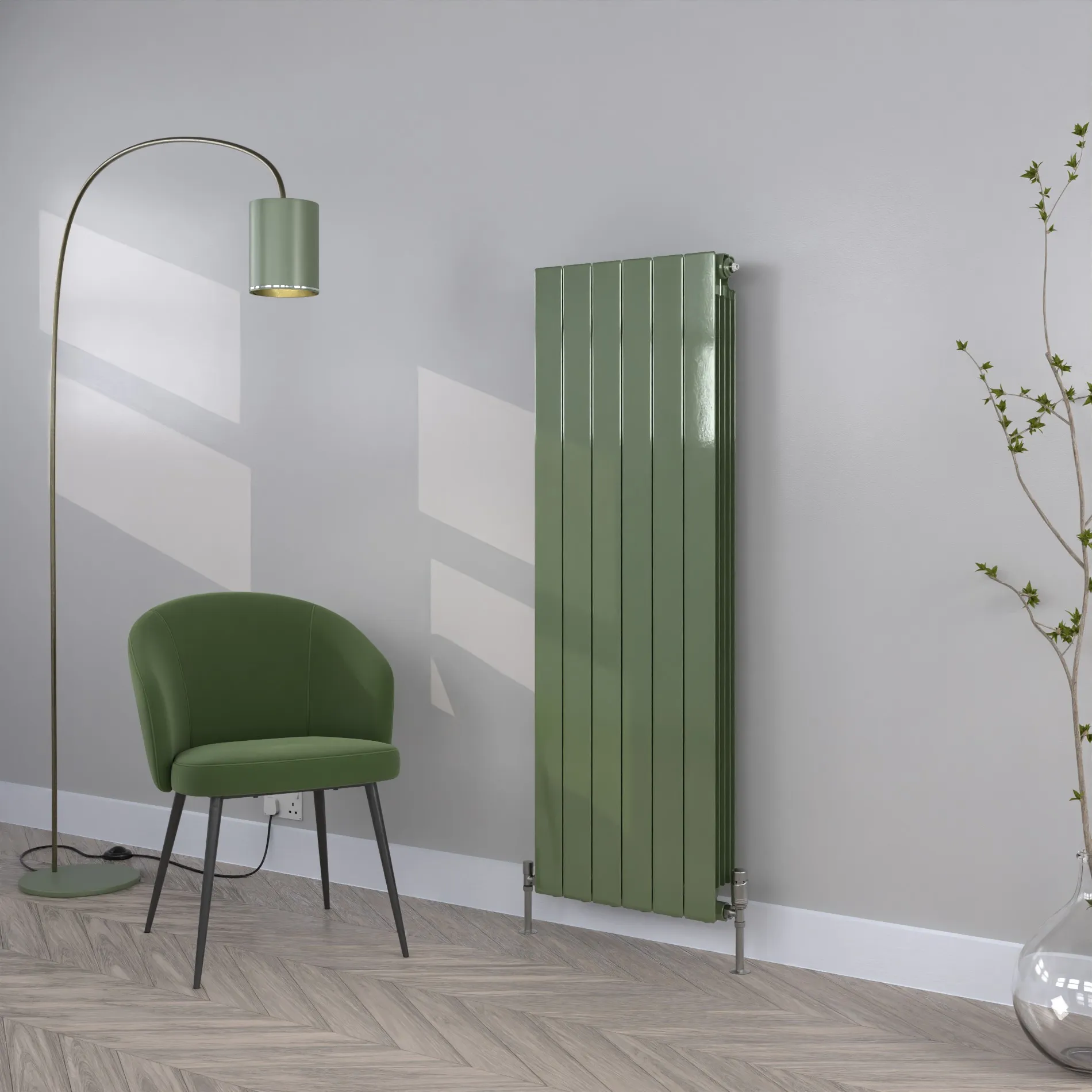
Traditional radiators were designed around high-temperature gas boilers.
Altherma radiators are different.
They’re engineered from the ground up to work with:
- Lower water temperatures
- Continuous operation
- Modern heat pump systems
Instead of storing heat and releasing it slowly, Altherma radiators focus on fast, efficient heat transfer — perfectly matched to how heat pumps work in the real world.
Why Altherma Works So Well with Heat Pumps
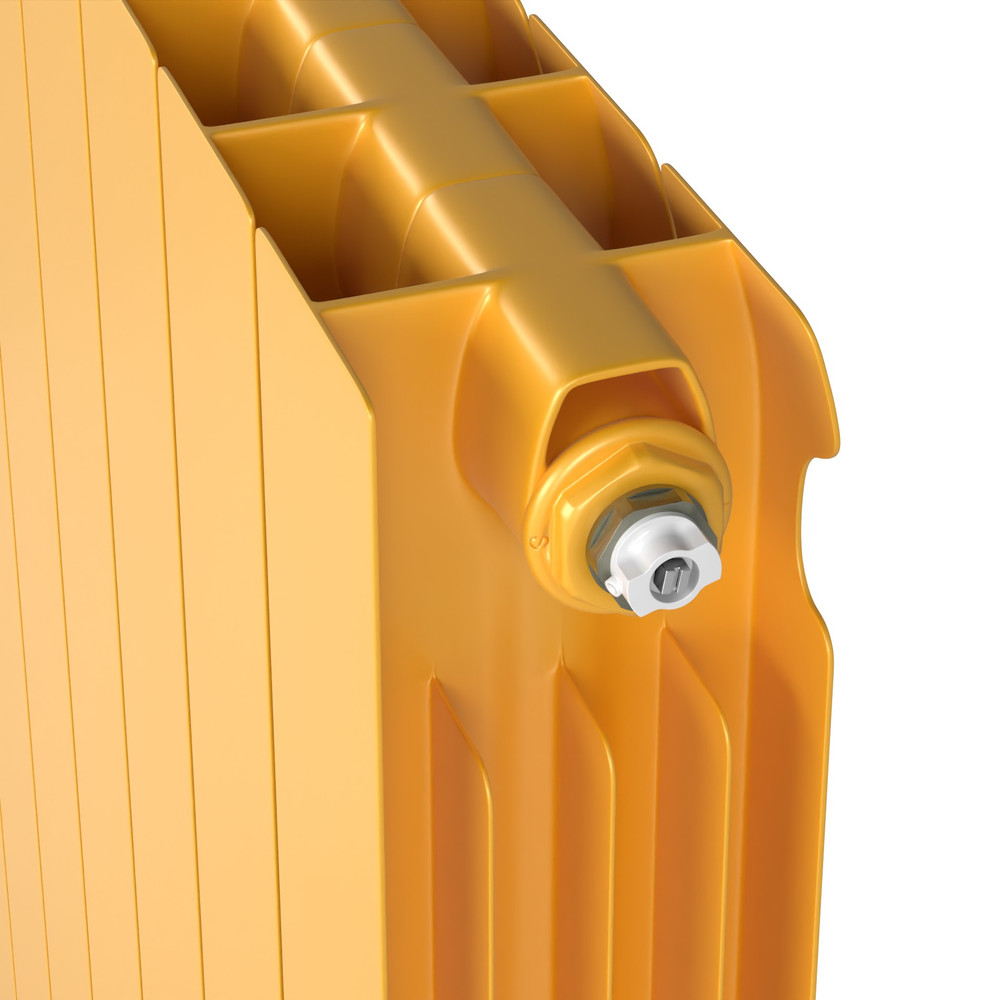
Aluminium construction
- Transfers heat faster than steel or cast iron
- Performs exceptionally well at lower flow temperatures
- Responds quickly to the steady “delivery van” style heat supply
Optimised internal waterways
- Designed to maximise surface contact
- Helps release heat into the room efficiently
- Makes every degree of warm water work harder
Heat pump ready by design
- Excellent outputs at Delta T30
- Ideal for modern, low-temperature systems
- No reliance on stored heat after switch-off
In simple terms:
Altherma empties every heat “van” quickly, keeping rooms comfortable all day — without needing high temperatures or oversized systems.
A Smarter Choice Than Oversizing Traditional Radiators
One common mistake with heat pumps is trying to compensate by fitting bigger steel or cast iron radiators.
The problem?
- They still heat up slowly
- They still rely on stored heat
- They’re not optimised for continuous low-temperature flow
Altherma takes a smarter approach:
- Faster response
- Higher efficiency per square metre
- Better comfort at lower system temperatures
That means:
✔ Improved heat pump efficiency
✔ Reduced running costs
✔ More consistent room temperatures

Customer Favourites:


